
This post is also available in:
 Français
  Русский
Chakri Day
A Vibrant Tribute to Thailand’s Royal Dynasty
Every year on April 6th, Thailand bursts into celebration for Chakri Day, a national holiday of paramount importance. This day commemorates the anniversary of Phra Buddha Yodfa Chulaloke’s ascension to the throne in 1782. Known as Rama I, he was the founder of the illustrious Chakri Dynasty. This day also marks the dawn of the Rattanakosin Era and the establishment of Bangkok as the kingdom’s capital, succeeding Ayutthaya.
At the heart of this commemoration are ceremonies steeped in tradition and reverence. The Royal Family, led by the current King Maha Vajiralongkorn Bodindradebayavarangkun (Rama X), the tenth ruler of his line, first gathers for a solemn religious service in the palace chapel. This is followed by a procession to the Royal Pantheon to pay homage to past kings.
The day culminates in the laying of a majestic wreath at the feet of the imposing statue of King Rama I, located on the Memorial Bridge (Saphan Phut). This symbolic act, witnessed by a vast crowd of devoted Thai citizens, political and military dignitaries, and prominent figures from civil society, is a testament to the deep reverence and unwavering affection the Thai people hold for their monarchy.
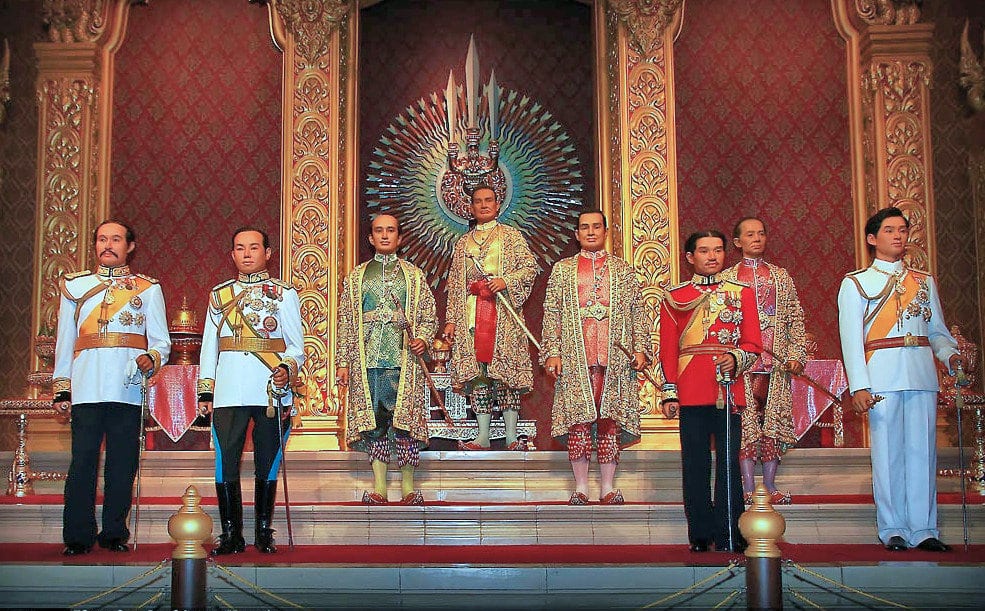
The Chakri Dynasty has not only reigned over Thailand for over two centuries but has profoundly shaped its destiny through the ages.
- Rama I (1782-1809) laid the foundations for a strong and unified kingdom, securing it from invasion and consolidating its borders.
- Rama II (1809-1824) and Rama III (1824-1851) presided over a golden age of art and literature, comparable to that of King Naraï in Ayutthaya. Rama III also strengthened the army, ensuring Siam’s security.
- Rama IV (1851-1868), after 26 years as a monk, opened the country to the outside world, engaging in trade relations with the West and encouraging the adoption of science and modernity.
- Rama V (1868-1910), a progressive and beloved ruler, continued the modernization of the country, initiating sweeping reforms of the administration, justice system, and financial system, abolishing slavery, and promoting education for all.
- Rama VI (1910-1925), known as the “Poet King,” enriched Thai language and literature. He also concluded important treaties with foreign powers, bolstering Thailand’s prestige on the world stage.
- Rama VII (1925-1935) marked a historic turning point by accepting a constitutional monarchy in 1932, following a revolution.
- Rama VIII (1935-1946) succeeded him under tragic circumstances, before passing the throne to his brother, Rama IX (1927-2016). The latter, a charismatic and deeply loved monarch, reigned for 70 years, transforming Thailand into a modern and stable state. His innovative economic theories, centered on self-sufficiency and responsibility, continue to inspire many countries today.
Today, Rama X (1952-present) carries forward the legacy of his illustrious predecessors, striving to guide Thailand towards a prosperous future while preserving its unique cultural identity and the unbreakable bond between the monarchy and the Thai people.
Chakri Day is much more than just a national holiday in Thailand. It is a cherished occasion to celebrate the country’s rich and eventful history, honor the memory of the monarchs who shaped it, and reaffirm the Thai people’s enduring attachment to their monarchy.