This post is also available in:
 Français
  Русский
Thai Customs and Etiquette
A Guide for Respectful Travelers
To avoid any misunderstandings and fully enjoy Thai culture, here’s a look at some important aspects of Thai life

The Monarchy
His Majesty King Maha Vajiralongkorn, the tenth monarch of the esteemed Chakri dynasty, ascended the throne as Rama X in 2016. As the only son of King Bhumibol Adulyadej and Queen Sirikit, he was proclaimed heir apparent at the age of 20.
The Royal Family holds a revered place in Thai hearts. Any disrespect shown towards them, especially by foreigners, is highly frowned upon.
The King, in particular, commands immense admiration. Images of him, often alongside the Royal Family, adorn Thai homes, reflecting the deep bond between the people and their sovereign.
Religion
All representations of Buddha, regardless of size or condition, are considered sacred. Never climb on statues for photographs, and avoid anything that could be perceived as disrespectful, such as posing in front of a Buddha statue in a disrespectful manner. Being mindful of other religions, regardless of your own beliefs, is a sign of tolerance that should be observed by all visitors.

Monks are forbidden from touching or being touched by women. To offer something to a monk, a woman should place it within his reach without direct contact. Out of respect, women should also avoid sitting next to monks on public transportation.
Social Hierarchy
A strong sense of social and familial hierarchy exists in Thailand. Those considered “phu yai” (literally “big person”) hold a higher social standing than those considered “phu noi” (literally “small person”). Factors like wealth, power, and knowledge contribute to one’s “phu yai” status. It’s important to note that this is a relative concept; you can be “phu yai” in relation to one person and “phu noi” in relation to another.
Respectful behavior towards those considered “phu yai” is expected, with juniors demonstrating deference to seniors. This can be observed in various relationships, such as adults and children, employers and employees, teachers and students, military personnel and civilians, and even Thais and non-Thais.
While this traditional hierarchy is somewhat less rigid in modern times, the concept of “phu mi hitiporn” has emerged. These individuals possess significant political and economic influence, often acquired through less conventional means.
Among peers of similar social standing, the terms “phi” (elder) and “nong” (younger) dictate hierarchy based on age. When addressing someone older, using “phi” before their name is a sign of respect.
Dress Code
Thais generally take great pride in their appearance, and being a tourist is no excuse for untidiness. It’s remarkable to witness impeccably dressed individuals in pristine white shirts emerge from modest wooden homes along Bangkok’s canals, heading to work.

When entering religious sites, modest attire is essential. This includes shirts or blouses, long pants or skirts, and avoiding anything considered revealing, such as miniskirts, shorts, or tank tops.
Some temples, like Wat Doi Suthep in Chiang Mai, kindly request visitors deemed inappropriately dressed to wear a provided sarong. Accepting this custom graciously demonstrates respect.
It is essential to remove your shoes before entering temples and homes. The piles of shoes and sandals at the entrance serve as a reminder. Failing to observe this tradition is considered highly offensive by Thais, as it is a matter of both tradition and hygiene.
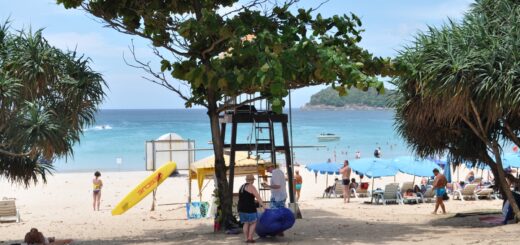
While Thailand is known for its beautiful beaches, nudity and even bikinis are not the norm and are technically prohibited by law. While bikinis may be tolerated on certain beaches in Phuket or Koh Samui, it’s crucial to remember that this practice can be offensive to Thais.
Public Displays of Affection
Public displays of affection between men and women are considered inappropriate. While some young couples might hold hands, this is the maximum acceptable intimacy in public. As surprising as it may seem to foreigners accustomed to images of massages and exotic fantasies, Thai people are very modest. You will never see Thais kissing or even hugging in public.
Greetings and "Face"
Losing face is considered a grave matter in many Asian cultures, especially in Thailand. Displays of anger are seen as vulgar and inappropriate. Maintaining composure, regardless of the situation, is crucial in Thailand. The monarchy, religion, and country are sacred, and while tolerant, Thai people do not accept disrespect towards any of these.
The Wai: A Graceful Greeting
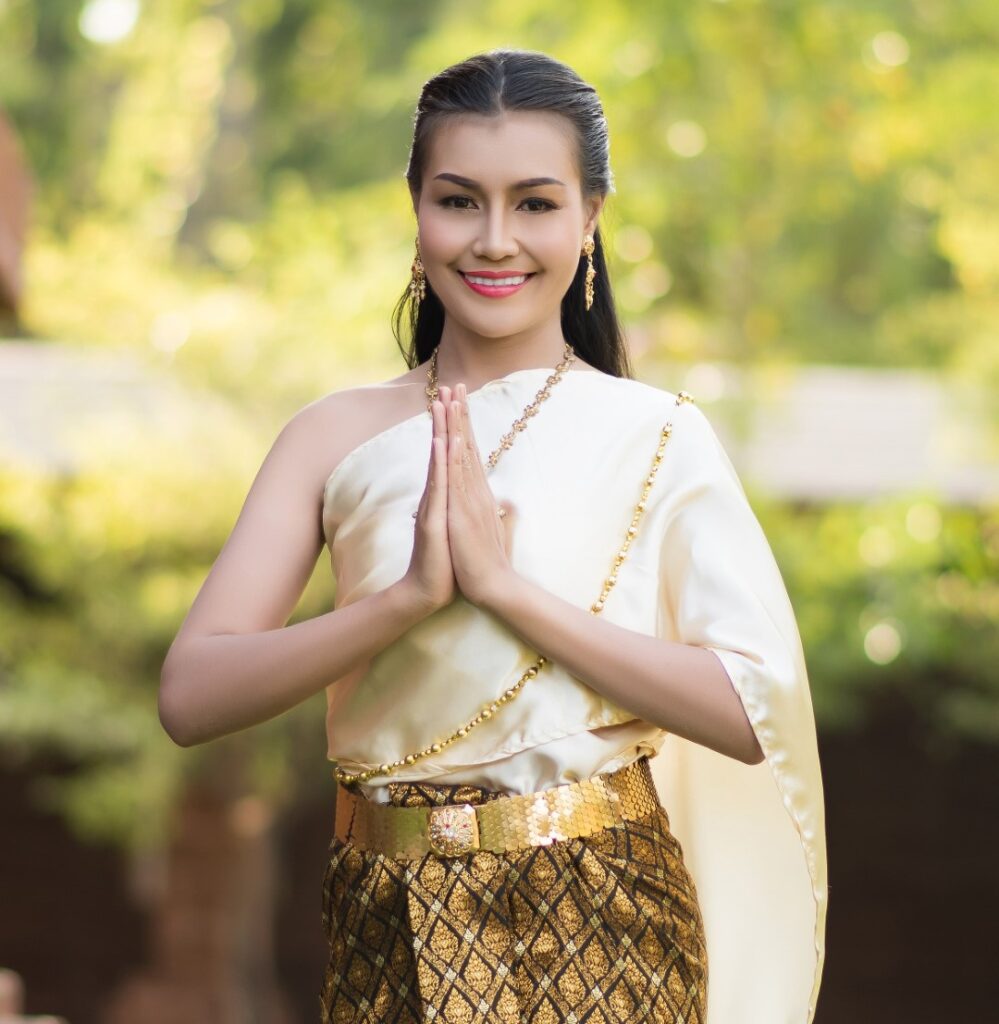
Instead of handshakes, Thais greet each other with the “Wai” – a gesture of pressing one’s palms together in front of the face, as if in prayer. The height of the hands reflects the level of respect shown. A standard greeting involves hands at chin level, while higher positions – nose or forehead – convey greater respect. Reciprocating a Wai is polite, except when offered by a child.
While handshakes are becoming more common in tourist areas, the Wai remains the norm outside those zones. Its elegance and cultural significance make it a gesture worth adopting.
Respect for Head and Feet
The head is considered the most sacred part of the body in Thai culture, so touching someone’s head, even in a friendly manner, is inappropriate. Conversely, feet are considered the least sacred. Pointing at someone or something with your feet is highly disrespectful. When sitting on the floor in a temple, tuck your feet beneath you or at least avoid pointing them towards Buddha images.
Avoid stepping over someone lying down, such as in a train. A slight bow when passing in front of someone is the Thai way of acknowledging the inconvenience.
Addressing Others
Thais typically address each other by their first names. When speaking to someone older, “Pi” precedes their name as a sign of respect. Friends often use nicknames, which are usually short and often reflect a personality trait or physical characteristic.
Common Thai nicknames include: Noi, Ying, He, Lek, Tim, Djim, Yai, Deng.
Common Thai first names include:
Female: Nittaya, Nonglak, Suana, Wannie
Male: Somchai, Somsak, Sootchad
It’s common for a monk to choose a child’s name at birth. Surnames are primarily used for official documents.
Patriotism and National Pride
 Thais are deeply patriotic. Criticizing their country is a serious offense best avoided to maintain positive relationships. The national anthem, played daily at 8:00 am and 6:00 pm on radio and television, commands respect. Thais pause their activities and stand in attention, and it’s courteous for visitors to do the same.
This patriotism extends to everyday situations. For instance, entrance fees to museums and some temples often differ for Thais and foreigners, with Thais typically paying half price. This practice, while potentially jarring for visitors accustomed to equal treatment, is a common expression of national pride and a perk of citizenship.
The Thai National Anthem
Composed shortly after the 1932 coup d’état, the Thai national anthem was first played in July 1932. The original lyrics were written by Khun Wichitmatra. In 1939, following Siam’s name change to Thailand, a contest for new lyrics resulted in the adoption of Luang Saranuprapan’s (1896-1954) version.
The anthem, with music composed by Phra Jenduriyang (Peter Feit, 1883-1968), a royal music advisor, was officially adopted on December 10, 1939. To this day, the anthem plays every morning at 8:00 am and evening at 6:00 pm on radio and television, reminding citizens to show respect for their nation.
Thai Script:
ประเทศไทยรวมเลือดเนื้อชาติเชื้อไทย
เป็นประชารัฐ ไผทของไทยทุกส่วน
อยู่ดำรงคงไว้ได้ทั้งมวล
ด้วยไทยล้วนหมาย รักสามัคคี
ไทยนี้รักสงบ แต่ถึงรบไม่ขลาด
เอกราชจะไม่ให้ใครข่มขี่
สละเลือดทุกหยาดเป็นชาติพลี
เลือดทุกหยาดเป็นชาติพลี
ประเทศไทยรวมเลือดเนื้อชาติเชื้อไทย
เป็นประชารัฐ ไผทของไทยทุกส่วน
อยู่ดำรงคงไว้ได้ทั้งมวล
ด้วยไทยล้วนหมาย รักสามัคคี
ไทยนี้รักสงบ แต่ถึงรบไม่ขลาด
เอกราชจะไม่ให้ใครข่มขี่
สละเลือดทุกหยาดเป็นชาติพลี
เลือดทุกหยาดเป็นชาติพลี
Transliteration (RTGS):
Prathet thai ruam lueat nuea chat chuea thai
Pen pracha rat, phathai khong thai thuk suan
Yu damrong kong wai dai thang muan
Duai thai luan mai rak samakkhi
Thai ni rak sangop, tae thueng rop mai khlat
Ekkarat cha mai hai khrai khom khi
Sala lueat thuk yat pen chat phali
Lueat thuk yat pen chat phali
Prathet thai ruam lueat nuea chat chuea thai
Pen pracha rat, phathai khong thai thuk suan
Yu damrong kong wai dai thang muan
Duai thai luan mai rak samakkhi
Thai ni rak sangop, tae thueng rop mai khlat
Ekkarat cha mai hai khrai khom khi
Sala lueat thuk yat pen chat phali
Lueat thuk yat pen chat phali
English Translation:
Thailand unites the flesh and blood of Thai people.
This is the land of Thai people, belonging to all.
Long live this nation, ours to uphold,
For Thais are united in heart and purpose.
Thais are peace-loving, but we’re not afraid to fight.
Our sovereignty will never be threatened.
We’re ready to sacrifice every drop of blood for our nation,
Every drop of blood for our cherished Thailand.
Thailand unites the flesh and blood of Thai people.
This is the land of Thai people, belonging to all.
Long live this nation, ours to uphold,
For Thais are united in heart and purpose.
Thais are peace-loving, but we’re not afraid to fight.
Our sovereignty will never be threatened.
We’re ready to sacrifice every drop of blood for our nation,
Every drop of blood for our cherished Thailand.
Curious about Thai celebrations? Discover our guide to festivals and holidays in Thailand.
Planning your trip? Read our health tips for Thailand guide.