For a foreigner with a Thai spouse or family, a job or a business in Thailand, a place of study here, or a property in Phuket, who wants to know which visa route applies. Not for the work permit itself, which has its own page, and not for retirement, the DTV or the LTR, which have theirs. Property owners should read section 4 first: on the official pages read, owning a home gives no visa by itself.
Last updated 26 November 2026
At a glance
Who the family routes are for
The Immigration Bureau’s Visa Extension page (no date shown) has three family cases:
- Family of a Thai national: the spouse (legally married and living together), unmarried children living with the foreigner and not over 20, and parents.
- Family of a Thai permanent resident: the spouse, children up to 20 and parents aged 50 or over.
- Family of a foreigner permitted to stay under listed items: the spouse, unmarried children up to 20 and parents aged 50 or over.
Visiting a Thai spouse or children needs proof of the relationship, with the spouse legally married and living together (same page).
The visa and the money rule
Abroad or by e-Visa: the Non-Immigrant O, to stay with family in Thailand for more than 60 days. O8 is for a Thai family, O7 for a non-Thai family. Single entry, validity 3 months (Thai e-Visa site, no date shown; Ministry of Foreign Affairs, Types of Visa, presentation (file named 69.08.31, no date printed), pages 68 and 69).
- Thai family (O8): a monthly income of at least 40,000 baht or a balance of 400,000 baht, details of the family in Thailand, and proof of the relationship (marriage, birth or adoption certificate).
- Non-Thai family (O7): financial evidence of at least 30,000 baht (bank statements of the last 3 months or a sponsor letter), and proof of the relationship.
In Thailand: the extension of stay on the family cases, through the Immigration Bureau (Visa Extension page, no date shown). For the husband of a Thai woman, the Bureau page asks for an average annual income of at least 40,000 baht a month, or at least 400,000 baht in a bank account in Thailand for the past two months, to cover one year of expenses. Documents: the marriage certificate, evidence of Thai nationality, a deposit certificate with the bank book or proof of income, and an affidavit confirming the marital or parental status.
In Phuket you apply at Phuket Immigration: see “Phuket Immigration: office, hours and what to bring“, and “Staying longer in Thailand: extensions and re-entry” for the counter and the re-entry permit.
The O7 and O8 figures are the same in the Ministry’s presentation (file named 69.08.31, no date printed): no change found.
Reader note, 26 November 2026. The official pages we read do not say whether an unmarried partner can use the family route. The official pages we read do not state the money rule for the wife of a Thai man, or whether the source of the funds must be shown. The official pages we read do not state the length of each extension on the family cases (the e-Visa O is valid 3 months, single entry; its stay length is not given). The official pages we read do not state the fee for the family e-Visa and the family extension. The official pages we read do not state any Phuket rule for marriage or family: Phuket Immigration’s own list has no such manual. The official pages we read do not state a dated change in 2025 or 2026 to the family figures. Please ask the immigration office before you apply.
The Non-B visa and the work extensions
This section covers the visa only. The work permit itself is on its own page.
The Non-B cards on the Thai e-Visa site (no date shown): employment (also with BOI), business visit, frequent business visit (3 years), internship, teacher or academic staff (also with BOI), sport, working holiday (New Zealand) and work and holiday (Australia).
Non-B for employment (Thai e-Visa site, no date shown): financial evidence of at least 30,000 baht, and the Minister of Labour’s approval letter for the work permit application (WP32), or the work permit itself for a Non-B renewal. Japanese nationals are waived from the WP32. Single entry, validity 3 months.
In Thailand: the extensions (Immigration Bureau, Visa Extension page, no date shown):
- business: for a foreigner with a business in Thailand, with paid-up capital of at least 2,000,000 baht, audited financial statements for the past 2 years, and 1 foreigner to 4 Thai permanent employees; 1 to 1 for an international trade representative office, a regional office or an overseas branch;
- teachers: a work permit and a teaching licence.
After university. International students on the Non-ED Plus may extend for 1 year after graduation to look for work, then apply for another visa type; a Non-B needs a work permit from the Ministry of Labour (Ministry of Foreign Affairs infographic, page 3, dated July 2024).
Reader note, 26 November 2026. The official pages we read do not state the income needed for the business extension (Annex A) and its list of documents (PDF 7-1). The official pages we read do not state the length of stay and of each extension for Non-B and for the business and teacher extensions. The official pages we read do not state the fee for the Non-B visa and for the work extensions. The official pages we read do not state any Phuket rule for work extensions: Phuket Immigration’s own list has no work manual. The official pages we read do not state a dated change in 2025 or 2026 to the Non-B figures. Please ask the immigration office before you apply.
The Non-ED visa and the study extensions
The Non-ED cards on the Thai e-Visa site (no date shown): elementary to secondary; bachelor’s or higher; short course (Thai or English language, Muay Thai, that is Thai boxing); government workshop, training or seminar; monk, nun or priest studying the Dharma (the Buddha’s teaching); curricular internship or exchange student; vocational or technical study below bachelor’s.
What each card asks: financial evidence covering tuition and living costs (bank statements of 3 months or a sponsor letter), a letter from the competent authority or university, and an enrolment letter signed by an authorised person with a copy of their ID. Single entry, validity 3 months.
In Thailand: the study extensions (Immigration Bureau, Visa Extension page, no date shown): one for a government school, and one for a private school confirmed by a government agency, except an international school or higher education. Parents of a student show a deposit of at least 500,000 baht in a Thai bank for the past 3 months.
Non-ED Plus, for international students at a university in Thailand at bachelor level or above (Ministry of Foreign Affairs infographic, page 3, dated July 2024): the student can leave and re-enter without a re-entry permit; the university submits the extension; after graduation the student may extend for 1 year to look for work or travel.
For the 90-day report, see “Reporting duties in Thailand: TM30 and the 90-day report“.
Reader note, 26 November 2026. The official pages we read do not state the length of stay and of each extension on the ordinary Non-ED (the e-Visa page gives the validity of 3 months only). The official pages we read do not state the fee for the Non-ED visa and the study extensions. The official pages we read do not state any Phuket rule for study extensions: Phuket Immigration’s own list has no study manual. The official pages we read do not state a dated change in 2025 or 2026 to the Non-ED rules (the only dated item is the Non-ED Plus infographic of July 2024). Please ask the immigration office before you apply.
What owning property does and does not give
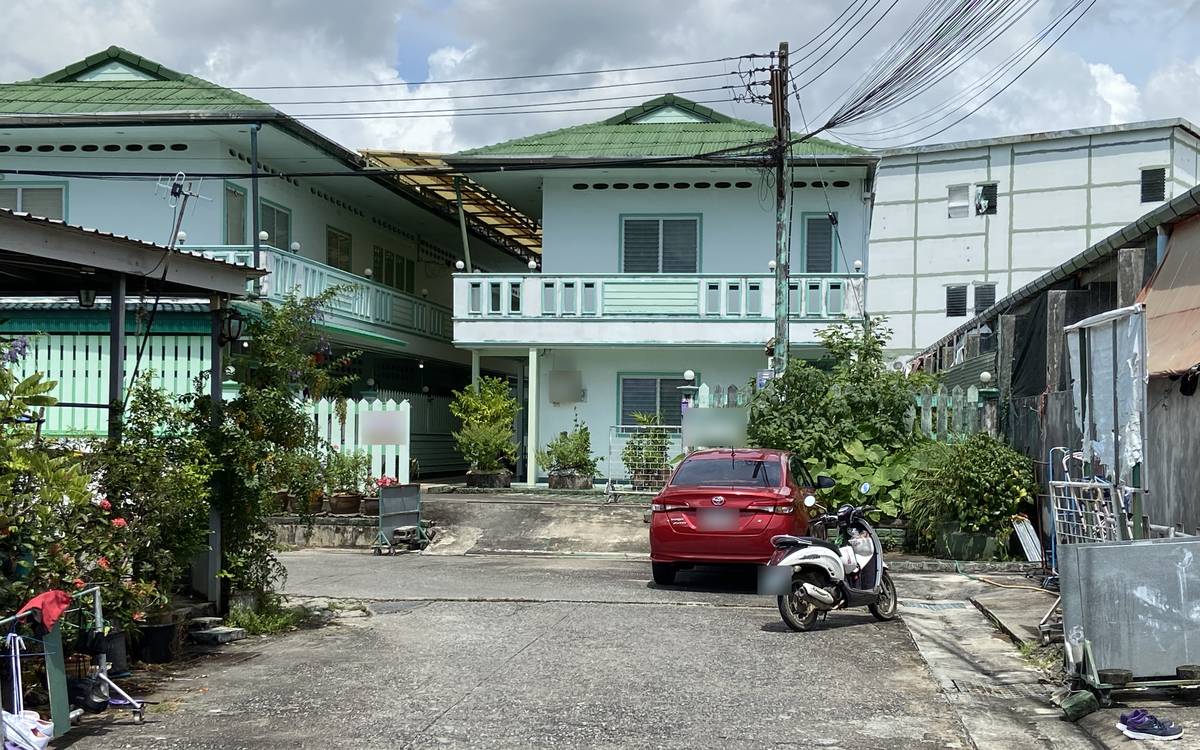
What it does not give. No official page read says that owning a home or a condominium gives a right to a visa or a stay.
Reader note, 26 November 2026. The official pages we read do not say that owning a home gives a right to stay. The official pages we read do not state the length of each investment extension. The official pages we read do not state the fee for the investment extension. The official pages we read do not state a dated change in 2025 or 2026 to the property or investment rules. Please check your own visa route with the immigration office, and ask it before you apply.
Where property counts. Only as part of an investment, under three routes:
- The investment extension in Thailand (Immigration Bureau, Visa Extension page, no date shown). It is for a holder of a non-immigrant permission who invests at least 10,000,000 baht, shown by a transfer from abroad, in a condominium bought or rented for no less than 3 years at a price or rent of at least 10,000,000 baht, or in a fixed deposit, or in bonds, or a combination. A fixed deposit must be in a Thai-registered bank with more than 50 percent Thai shareholders; bonds are government or state bonds. Documents for a condominium: the purchase agreement and the ownership registration issued by the government, or the long-term lease. The 3,000,000 baht level applies only to someone who entered before 1 October 2006 and was permitted to stay year after year.
- The LTR visa (Board of Investment, no date shown): Thai property in your own name counts toward the USD 500,000 investment of the Wealthy Global Citizens category and the USD 250,000 investment of a Wealthy Pensioner with an income of USD 40,000 to 80,000. See “LTR visa and Thailand Privilege: two long-stay routes“.
- The O-X retirement visa (Ministry of Foreign Affairs, O-X sheet, no date shown): among its benefits, the holder can buy a condominium in accordance with the Condominium Act. The sheet does not say that the purchase gives a visa. See “Retiring in Thailand: the retirement visa and extension“.
In Phuket. Phuket Immigration’s list holds three extensions under investment laws (the Industrial Estate Authority Act, the Petroleum Act and the Investment Promotion Act), numbers 14, 15 and 16 of its manual. None is a condominium case (People’s manual, no date shown).
Sources
- Immigration Bureau, Visa Extension page (37 cases) (no date shown).
- Thai e-Visa (Ministry of Foreign Affairs), Non-Immigrant O page, business and investor page, and Non-Immigrant ED page (no date shown).
- https://www.thaievisa.go.th/visa/business-investor-visa
- https://www.thaievisa.go.th/visa/non-immigrant-ed
- Board of Investment, Long-Term Resident (LTR) Visa site (no date shown).
- Ministry of Foreign Affairs, Non-Immigrant O-X (long stay) sheet (no date shown).
- Ministry of Foreign Affairs, Types of Visa, presentation, 78 pages (file named 69.08.31, no date printed), pages 68 and 69.
- Ministry of Foreign Affairs, infographic on visa exemption, visa on arrival, DTV and Non-ED Plus, 4 pages (July 2024 printed on every page), page 3.
- Phuket Immigration, People’s manual (no date shown).